Source Phone Charging Stand for Home Office and Travel
Compare 30 phone charging stand options from verified suppliers. Buyers can evaluate adjustable designs, wireless charging capabilities, and material quality for home, office, or travel use.
Key considerations
Products List






Comprehensive Sourcing Guide
Phone Charging Stand Sourcing Guide
Product Scope and Observed Listing Signals
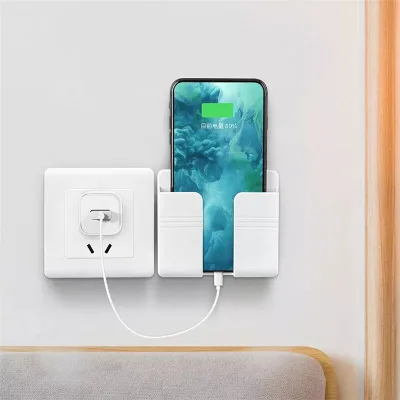
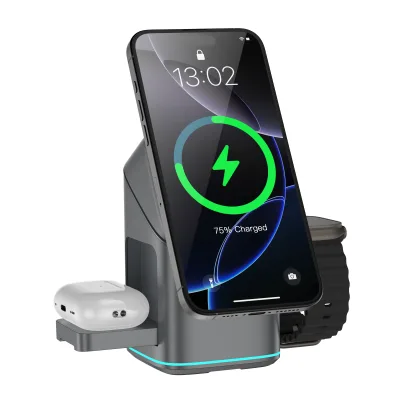
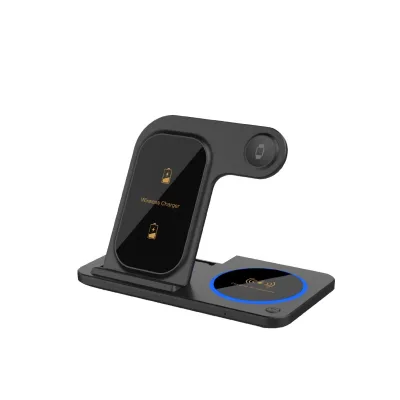
The market for phone charging stands currently presents a fragmented landscape where functional utility and aesthetic design often diverge across different supplier listings. Buyers will observe a wide variance in product definitions, ranging from simple passive holders designed solely for device stabilization to active units integrating wireless charging coils. The observed data indicates a price range spanning from $0.05 to $3,000, a disparity that reflects the difference between basic ABS plastic mounts and premium aluminum alloy units with multi-watt fast charging capabilities. This broad spectrum necessitates careful filtering, as the term "phone charging stand" can encompass everything from a $0.05 generic holder to a high-end branded wireless charger. Procurement teams must clearly distinguish between passive stands, which serve only as physical supports, and active charging stations that require electrical input and internal circuitry.
Listing signals further complicate the sourcing process due to inconsistent attribute labeling and mixed packaging details. Some products are marketed with specific brand names like "xinyue" and feature private molds, suggesting customized manufacturing capabilities, while others are listed under generic model numbers such as "AVA1652" or "SYEN015" with minimal branding. Packaging also varies significantly, with some items shipped in individual color boxes or OPP bags, while others are packed in bulk cartons containing 30 pieces per box. These logistical differences impact not only the unit cost but also the final retail presentation and shipping volume. Buyers must verify whether the listed price includes the retail packaging or if the product is intended for bulk distribution in master cartons, as this distinction affects both the landed cost and the end-user experience.
Technical Specifications to Verify
Dimensional accuracy and material composition are critical factors when evaluating phone charging stands, as these attributes directly influence device compatibility and durability. The observed specifications reveal a size range from compact 10x9x3 cm packages to larger 22x22x22 cm units, indicating that buyers must match the stand’s physical footprint to their target device size, which is noted to accommodate smartphones between 3.5 and 7 inches. Material choices also vary, with listings citing ABS plastic, general plastic, and aluminum alloy constructions. Each material offers distinct advantages; ABS and plastic provide lightweight, cost-effective solutions suitable for high-volume distribution, while aluminum alloy units offer a premium feel and potentially better heat dissipation for active charging models. Procurement teams should request physical samples to verify the weight, which ranges from 80g to 150g per unit, ensuring the stand is sturdy enough to prevent tipping while remaining portable.
Functional capabilities must be rigorously tested to ensure they align with the intended use case, particularly regarding charging performance and adjustability. Some listings explicitly state "Function: Holder Only," confirming that these units do not provide power, while others advertise "Fast Wireless Charging" with output powers ranging from 5W to 15W. This distinction is vital for buyers targeting the consumer electronics market, as incompatible charging speeds can lead to customer dissatisfaction. Additionally, features such as adjustable angles and geometry shapes are highlighted in several listings, suggesting that ergonomic design is a key selling point. Buyers should verify the stability of the holding mechanism, as the "Device fix mode" is described simply as "Holding," which may imply a passive grip rather than a secure locking mechanism. Confirming the exact charging protocol compatibility, such as Qi standards for wireless models, is essential to ensure seamless operation with various smartphone brands.
Compliance and Safety Documentation
Regulatory compliance is a non-negotiable aspect of sourcing electronic accessories, particularly for products that involve electrical charging components. Listings for wireless charging stands often cite certifications such as CE, FCC, and ROHS, which are critical for market access in Europe, North America, and other regulated regions. However, buyers must verify the validity and scope of these certifications, as they may apply only to the charging module and not the entire assembled unit. For passive stands that do not involve electricity, certification requirements are generally less stringent, but buyers should still ensure that materials used, such as ABS or aluminum, comply with relevant safety standards regarding flammability and chemical composition. The presence of a "Radiation-Proof" characteristic in some listings requires careful scrutiny, as this claim must be substantiated by independent testing reports to avoid misleading marketing assertions.
Documentation requirements also extend to warranty and liability considerations, which vary significantly across suppliers. Some products offer a one-year warranty, providing a baseline level of protection against manufacturing defects, while others may have limited or no warranty coverage. Buyers should establish clear terms regarding defect rates and return policies before placing large orders. Furthermore, the origin of the products, primarily noted as China with specific mentions of Guangdong and Yiwu, may influence the regulatory landscape depending on the destination market. Importers must ensure that all provided documentation, including test reports and compliance certificates, is up-to-date and issued by accredited laboratories. Failure to verify these documents can result in customs delays, product recalls, or legal liabilities, making thorough due diligence on safety standards a priority in the procurement process.
Cost Drivers and Commercial Terms
The cost structure of phone charging stands is influenced by multiple variables, including material selection, manufacturing complexity, and order volume. The observed MOQ range of 1 to 500 pieces suggests flexibility for small buyers, but economies of scale likely apply for larger orders, potentially reducing the unit cost significantly. Products with private molds, such as those from the "xinyue" brand, may incur higher initial tooling costs but offer better differentiation in the market. Conversely, generic models with standard geometries may be cheaper to produce but lack unique branding opportunities. Buyers should analyze the total landed cost, which includes not only the product price but also shipping, insurance, and import duties, as packaging dimensions and weights directly impact freight charges. For instance, bulk packing in cartons of 30 pieces with a gross weight of 10kg per carton offers more efficient shipping than individually boxed units.
Commercial terms and customization options also play a significant role in the final cost and procurement strategy. Some suppliers offer logo printing services, allowing buyers to brand the products for retail distribution, while others provide "Without Logo Printing" options for generic sales. The availability of customization, including color variations like black, golden, gray, white, and green, adds value but may require minimum order quantities to justify production changes. Buyers should negotiate clear terms regarding payment methods, lead times, and quality assurance protocols. It is advisable to request a detailed quotation that breaks down costs for tooling, production, and packaging, ensuring transparency in pricing. Additionally, understanding the supplier’s capacity to handle rush orders or volume fluctuations can provide a competitive advantage in dynamic markets.
Supplier Qualification and Quality Control
Evaluating supplier qualifications is essential to mitigate risks associated with inconsistent product quality and unreliable delivery. Buyers should prioritize suppliers who demonstrate transparency in their manufacturing processes and provide verifiable information about their facilities. The mention of specific origins like Guangdong and Yiwu can serve as a starting point for due diligence, as these regions are known for their electronics and accessory manufacturing hubs. However, geographic location alone does not guarantee quality; therefore, buyers should request factory audits or third-party inspection reports to assess production capabilities and quality management systems. Suppliers offering private molds and customization services should be evaluated on their design flexibility and ability to maintain consistency across production batches.
Quality control measures must be integrated into the procurement process to ensure that delivered products meet specified standards. Buyers should define clear acceptance criteria for dimensions, material integrity, and functional performance, particularly for wireless charging units where output power stability is crucial. Implementing pre-shipment inspections can help identify defects before goods leave the factory, reducing the risk of receiving non-conforming products. For products with a one-year warranty, buyers should establish a clear process for handling returns and replacements, ensuring that defective items are addressed promptly. Collaboration with suppliers on continuous improvement initiatives can also enhance product quality over time, fostering a long-term partnership that benefits both parties. Regular communication and feedback loops are key to maintaining high standards and addressing any emerging issues proactively.
Long-Term Procurement Checks
Sustaining a successful sourcing strategy for phone charging stands requires ongoing monitoring of market trends and supplier performance. Buyers should regularly review product listings to identify new technologies, such as faster charging speeds or improved ergonomic designs, that could enhance their offerings. Keeping abreast of regulatory changes in target markets is also crucial, as compliance requirements may evolve over time. Suppliers who invest in research and development may offer innovative solutions that provide a competitive edge, making it important to maintain strong relationships with forward-thinking partners. Additionally, buyers should assess the sustainability of their supply chain, considering factors such as material sourcing and packaging waste, to align with growing consumer demand for eco-friendly products.
Long-term procurement checks should also include periodic reviews of commercial terms and supplier reliability. Buyers should evaluate whether current pricing structures remain competitive and whether suppliers are meeting delivery deadlines consistently. Establishing key performance indicators (KPIs) for quality, delivery, and customer service can provide objective metrics for supplier evaluation. Regular audits and performance reviews help identify areas for improvement and ensure that suppliers continue to meet the buyer’s expectations. By maintaining a proactive approach to supplier management, buyers can mitigate risks and capitalize on opportunities for growth in the dynamic phone charging stand market. This strategic focus on continuous improvement and relationship building is essential for long-term success in B2B procurement.
FAQs
What is the suitable smartphone size for this stand?
This stand is suitable for 3.5 to 7 inch smartphones. It features an adjustable design to accommodate various device sizes securely within the specified range for home or office use.
Does this product include a built-in charger?
No, this product does not include a built-in charger. It functions strictly as a holder only, providing a stable platform for your mobile phone without any charging capabilities integrated into the unit.
What materials are used to construct this stand?
The stand is constructed from ABS plastic and aluminum alloy materials. These durable materials ensure stability while keeping the single package weight light at approximately 0.080 kg for easy handling.
Can I customize the logo on this product?
Customization is available with support for logo printing on specific models. However, some variants are listed without logo printing, so you must verify the specific model requirements before placing an order.
What certifications does the wireless charger version hold?
The wireless charger version holds CE, FCC, and ROHS certifications. These standards ensure safety and compliance for the fast wireless charging functions which support output powers of 5W, 7.5W, 10W, and 15W.
What is the minimum order quantity for this item?
The minimum order quantity is 10 pieces for most models. Some listings indicate an MOQ range of 1 to 500, but the standard requirement for this specific product line is typically set at 10 units.
Where is the place of origin for these products?
The place of origin is China, specifically from locations like Guangdong and Yiwu. This ensures consistent manufacturing standards for the universal mobile stands and wireless chargers supplied to international buyers.
What is the warranty period for this stand?
The warranty period for this stand is 1 year. This coverage applies to the product's structural integrity and functionality, ensuring reliability for daily use in home or office environments.